Home
XtreamUIPro

Healthcare

Patient television on the hospital's own network

A bedside screen shows a channel line-up, the hospital's information and health-education videos, and nothing else you did not put there. Every bed or ward television is a line, and the whole service runs on servers inside the hospital.

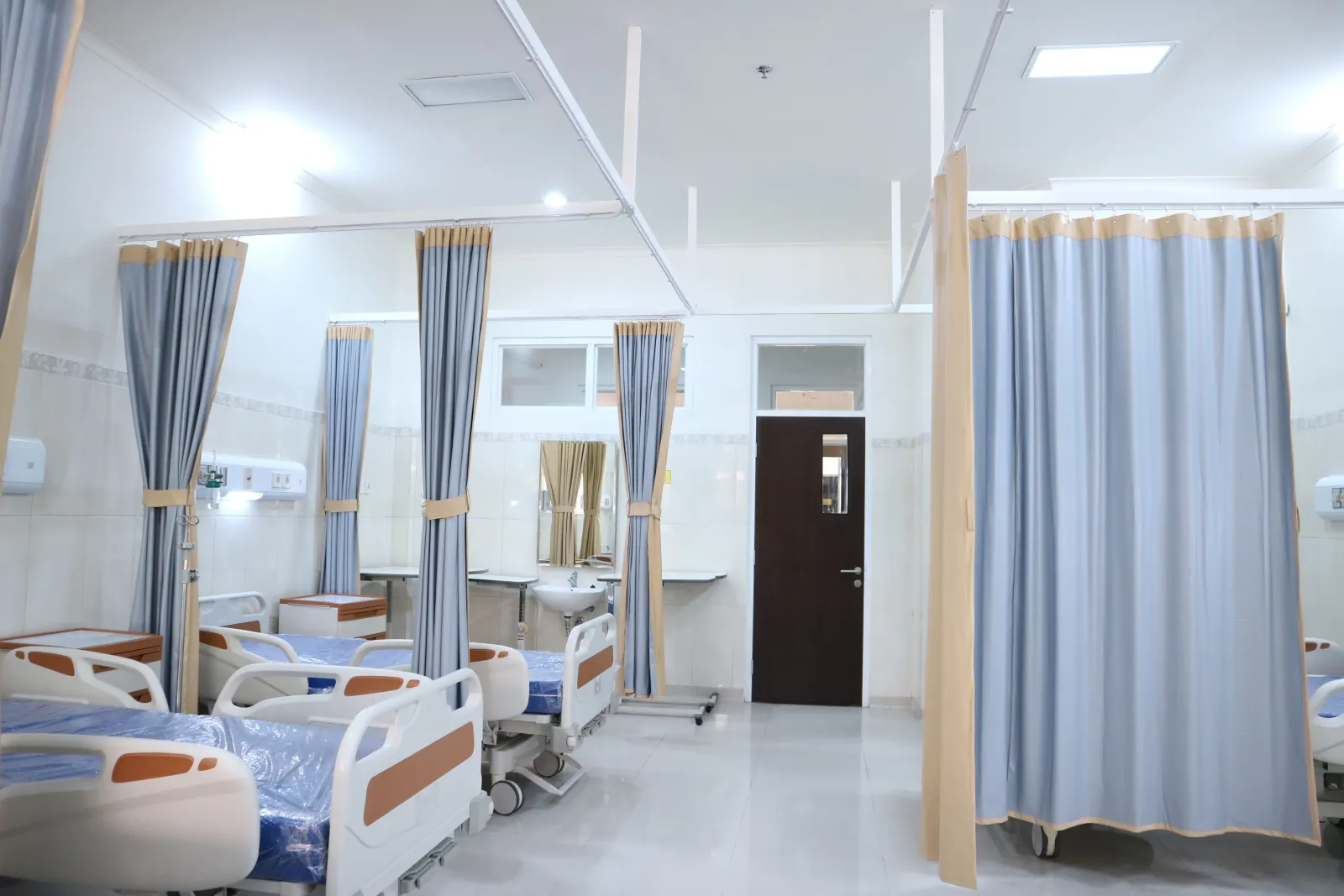
A hospital ward with empty beds and privacy curtains.
Photo: gorden murah surabaya · Pexels License

The challenges

What a hospital has to solve

  • Television that depends on the outside

    A rented bedside service or an internet stream fails when the uplink does, and patients with long stays notice at once.

  • Information that should reach every bed

    Visiting rules, how to prepare for a procedure and health-education films are printed or shown in a waiting room, not where the patient is.

  • Access that follows the bed, not the person

    Patients come and go all day, wards have their own rules, and the television service should not hold patient data to work.

How Xtream UI Pro helps

How the platform fits

  • A line-up per ward

    A bouquet is a set of channels; one package per ward type grants the right one, for instance a quieter line-up for the paediatric ward and a fuller one for long-stay rooms.

  • The hospital's own channel

    Welcome, ward rules and health-education films are movies and series in the catalogue, and a looping live channel can carry the notices; the same bouquet goes to every package.

  • Nothing leaves the building

    The panel, the origin and a node per wing run on the hospital network, and offline activation lets the service run on the local network without internet.

Platform capabilities

What this industry uses

The capabilities below are the ones this deployment relies on. Each is in the product today; nothing here is planned or on request.

  • Live streaming

    Live channels from your own sources, with EPG, catch-up and timeshift where the source allows, delivered as HLS or MPEG-TS to the apps and boxes your viewers use.

    Origin hub with one upstream per channel · RTMP in and out · ffmpeg transcoding

  • Video on demand

    Movies, series with seasons and episodes, and radio, organised in categories and bouquets, with TMDB metadata and an ingest job that downloads and encodes your sources.

    Signed, time-limited playback links · per-node VOD cache

  • Subscriber management

    A line is one viewer's access: package, bouquets, expiry, connection limit and output formats, with activation codes, trials and renewals following the same rules everywhere.

    Xtream Codes API, M3U/XMLTV, MAG and Enigma2 portals, web player

  • Distributed streaming nodes

    Enrol edge servers from the panel; viewers are routed to a node by load and by country, and the origin serves everybody while no node exists.

    Installed over SSH from the panel · GeoIP routing · heartbeats and traffic stats

  • Security & access control

    Two-factor sign-in, sealed secrets at rest, signed playback links bound to the viewer, IP and country rules, connection limits and brute-force protection.

    TOTP · AES-sealed keys · HMAC-signed URLs · GeoIP and ISP rules

  • Monitoring & operations

    Connection and traffic views, audit logs, Prometheus metrics, alerts by mail, Telegram or webhook, maintenance mode and a built-in update check.

    /metrics endpoints · job queue with leases · encrypted database backups

In the panel

The pages this deployment lives in

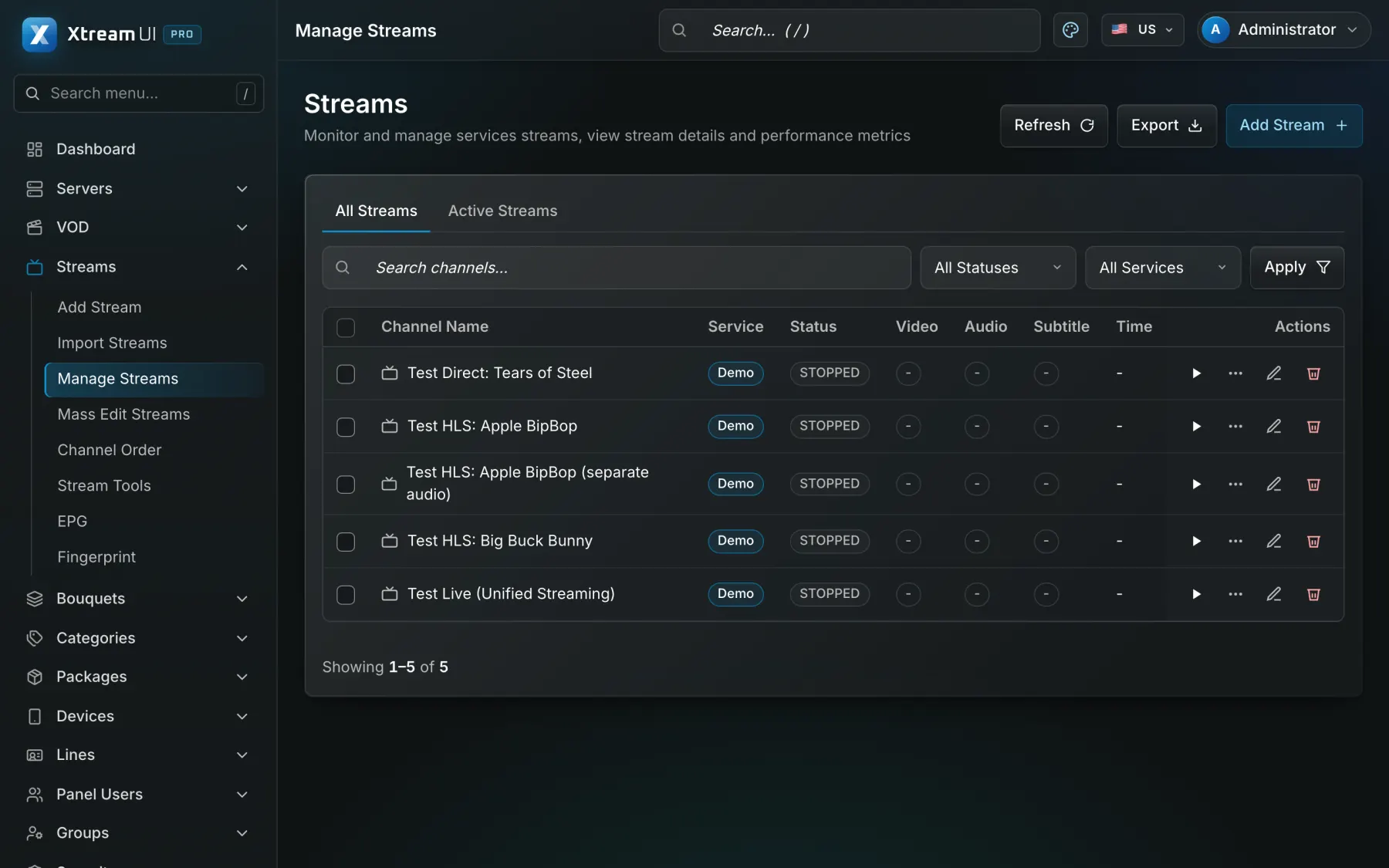
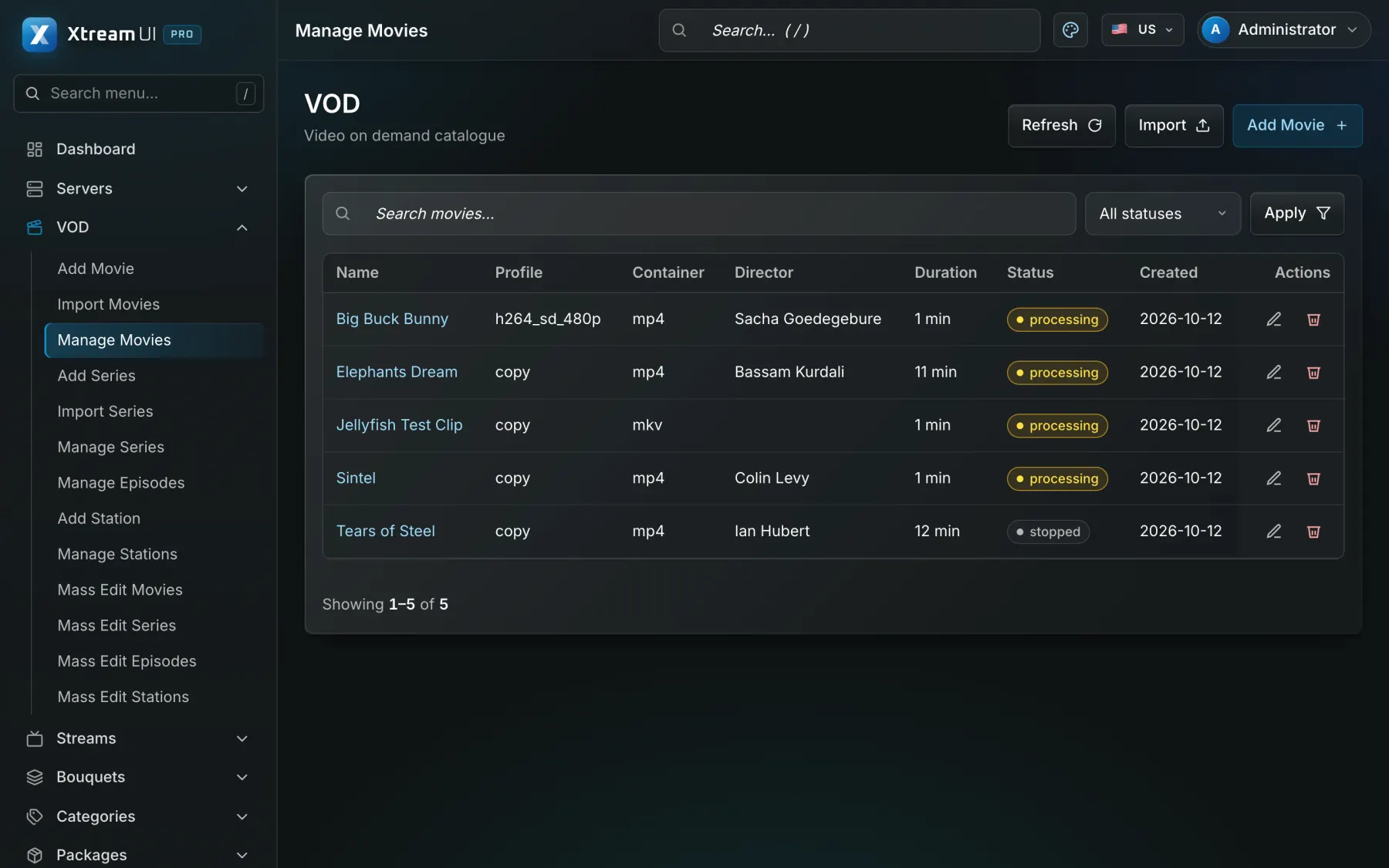
Screenshots of the dashboard of a fresh installation with the sample catalogue. Nothing is mocked up.

The Streams page of the dashboard: the live channels with their status, category, source and output formats.
Live streaming · Origin hub with one upstream per channel · RTMP in and out · ffmpeg transcoding
The Movies page of the dashboard: the films of the catalogue with their category, year and status.
Video on demand · Signed, time-limited playback links · per-node VOD cache

Infrastructure architecture

Example deployment: a 300-bed hospital

A management server in the hospital data room, a node in each of the main wings, a licensed channel line-up plus the hospital's information and health-education channel, and a line per bed or per ward television.

Pick a part of the diagram to see what it does.

In a hospital deployment the sources are the licensed channel feeds and the hospital's own videos; the panel holds the bouquets and one line per bed or ward television, with no patient data; the origin and a node per wing serve the screens on the local network; the IT team, or a system of its own, connects through the Reseller API.

  1. Install in the data room

    The panel, the API, the worker and the origin run on a hospital server; the playback base is the internal address, and the licence key is activated offline on the local network.

  2. Build the line-ups and the information channel

    One bouquet per line-up, one for the hospital's information and health-education videos, and one package per ward type granting its line-up plus the information bouquet.

  3. A line per bed or ward television

    Lines are named by bed or ward, with a long expiry so a bed never goes dark between patients and a connection limit of one for a bedside screen.

  4. A node per wing

    Each wing's node takes the live channels once from the origin and caches the videos, so the screens of that wing do not load the central server.

Configuration mapping

Your concepts, the platform's objects

The platform has no industry-specific objects: a bouquet, a line, a package or a partner account is used as the concept your industry needs. These are conceptual mappings, not native features of that industry.

Step-by-step setup guide

Prerequisites, installation on the hospital network, ward line-ups, a line per bed, the information channel, security and troubleshooting, step by step.

Read the setup guide
In your industryOn the platform
Ward line-upBouquet: a named set of channels, films or series that a package grants
Bed or ward televisionLine: one access with its package, bouquets, expiry, connection limit and outputs
Television channel or information loopLive channel: a stream with its sources, EPG and output formats
Health-education and information videosVOD catalogue: movies and series with seasons and episodes, categories and metadata
Access period of a bedExpiry date of the line, renewed by a package, a credit or the API
Wing or building nodeStreaming nodes: edge servers enrolled from the panel, one per site or building
Screens per bedMax connections of the line: how many devices may watch at once

Integration considerations

The panel has no native integration with hospital systems. If the hospital wants lines created or disabled from another system, that system calls the Reseller API and can listen to webhooks; the connectors for hosting and commerce platforms are not needed for an internal deployment.

Security considerations

A line is a bed or a ward television, not a person, so the panel holds no patient data. Keep the platform on the hospital network or behind your reverse proxy, bind a line to its television's address where addresses are fixed, give panel accounts two-factor sign-in and permission groups, and keep the audit log and the encrypted backups.

Content rights and licensing

The hospital needs the rights to the channels it distributes to its patients and to the videos it publishes; the platform supplies no content and no rights. Standard plans apply.

Content Rights & Acceptable Use

Help centre

Questions from this industry

The questions operators ask before a deployment. The help centre has the general ones.

Help centre
Does the panel hold patient information?

No. A line is a bed or a ward television with a name you choose, such as a bed number. The panel needs no patient name or record to play video.

Can it run without an internet connection?

Yes for what is on the local network: offline activation of the licence key works on the LAN, and the information videos and internal feeds stay available. External channel feeds still depend on the uplink.

Is there a nurse call or an electronic patient record integration?

No. The platform is a television and video service; it has no nurse call, patient record or EHR integration. Anything else would be built on the Reseller API as a separate project.