Home
XtreamUIPro

Broadcasting & Television

Distribute your own channels over your own infrastructure

Your linear channels become OTT channels with EPG and catch-up, your archive a VOD catalogue, and your distribution partners accounts you control — delivered by streaming nodes you place where your viewers are.

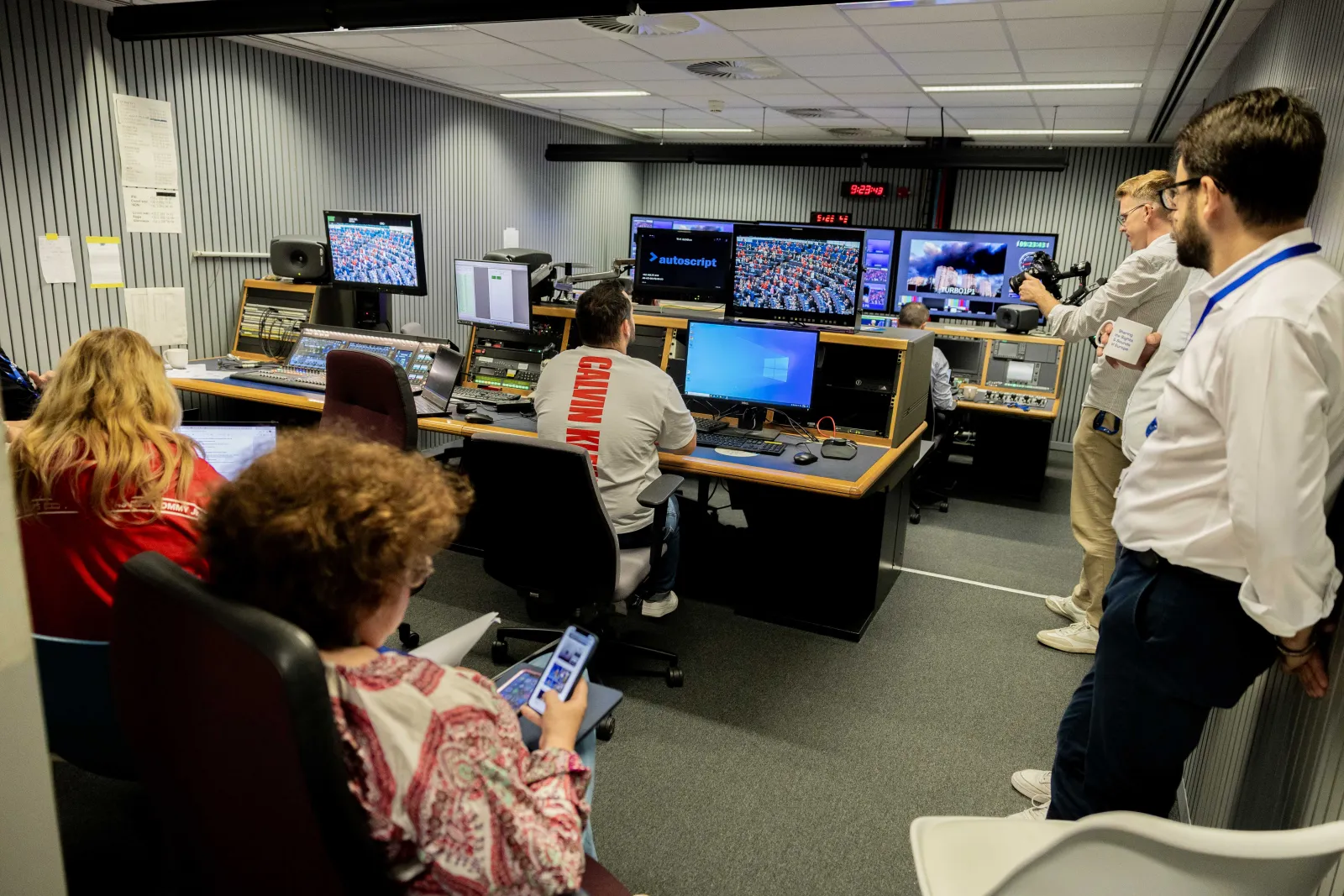
A television control room with its wall of monitors during a live broadcast.
Photo: European Commission, Audiovisual Service · CC BY 4.0

The challenges

What a broadcaster has to solve

  • Reaching viewers beyond the antenna

    Viewers expect the channel on their phone, their smart TV and their box, with the programme guide and the possibility to catch up on what they missed.

  • Capacity for peaks

    A match or a news event multiplies the audience in minutes; delivery has to scale by adding servers, not by rebuilding the service.

  • Partners and territories

    Distribution partners need their own accounts and limits, and some content may only be delivered in some countries.

How Xtream UI Pro helps

How the platform fits

  • Channels with EPG and catch-up

    Each linear feed is a live channel with its EPG source, timeshift and catch-up where allowed, delivered as HLS or MPEG-TS to the common player apps.

  • Nodes where the audience is

    The origin takes each channel once; enrolled nodes fan it out, and viewers are routed to a node by load and by country.

  • Partners as delegated accounts

    A distribution partner is a partner account with credits, permissions and its own dashboard; the API lets its systems create and renew access.

Platform capabilities

What this industry uses

The capabilities below are the ones this deployment relies on. Each is in the product today; nothing here is planned or on request.

  • Live streaming

    Live channels from your own sources, with EPG, catch-up and timeshift where the source allows, delivered as HLS or MPEG-TS to the apps and boxes your viewers use.

    Origin hub with one upstream per channel · RTMP in and out · ffmpeg transcoding

  • Distributed streaming nodes

    Enrol edge servers from the panel; viewers are routed to a node by load and by country, and the origin serves everybody while no node exists.

    Installed over SSH from the panel · GeoIP routing · heartbeats and traffic stats

  • Video on demand

    Movies, series with seasons and episodes, and radio, organised in categories and bouquets, with TMDB metadata and an ingest job that downloads and encodes your sources.

    Signed, time-limited playback links · per-node VOD cache

  • Partner management

    Delegated accounts with credits, permissions and their own dashboard, up to five levels deep, for the distributors, operators and resellers you work with.

    Groups and permissions · credit ledger · sub-partners

  • Monitoring & operations

    Connection and traffic views, audit logs, Prometheus metrics, alerts by mail, Telegram or webhook, maintenance mode and a built-in update check.

    /metrics endpoints · job queue with leases · encrypted database backups

  • API & integrations

    Create, renew and suspend access from your own systems through the Reseller API, receive signed webhooks, and connect billing or commerce platforms with a ready connector.

    Reseller API with idempotent request ids · Admin API keys · 17 connectors

In the panel

The pages this deployment lives in

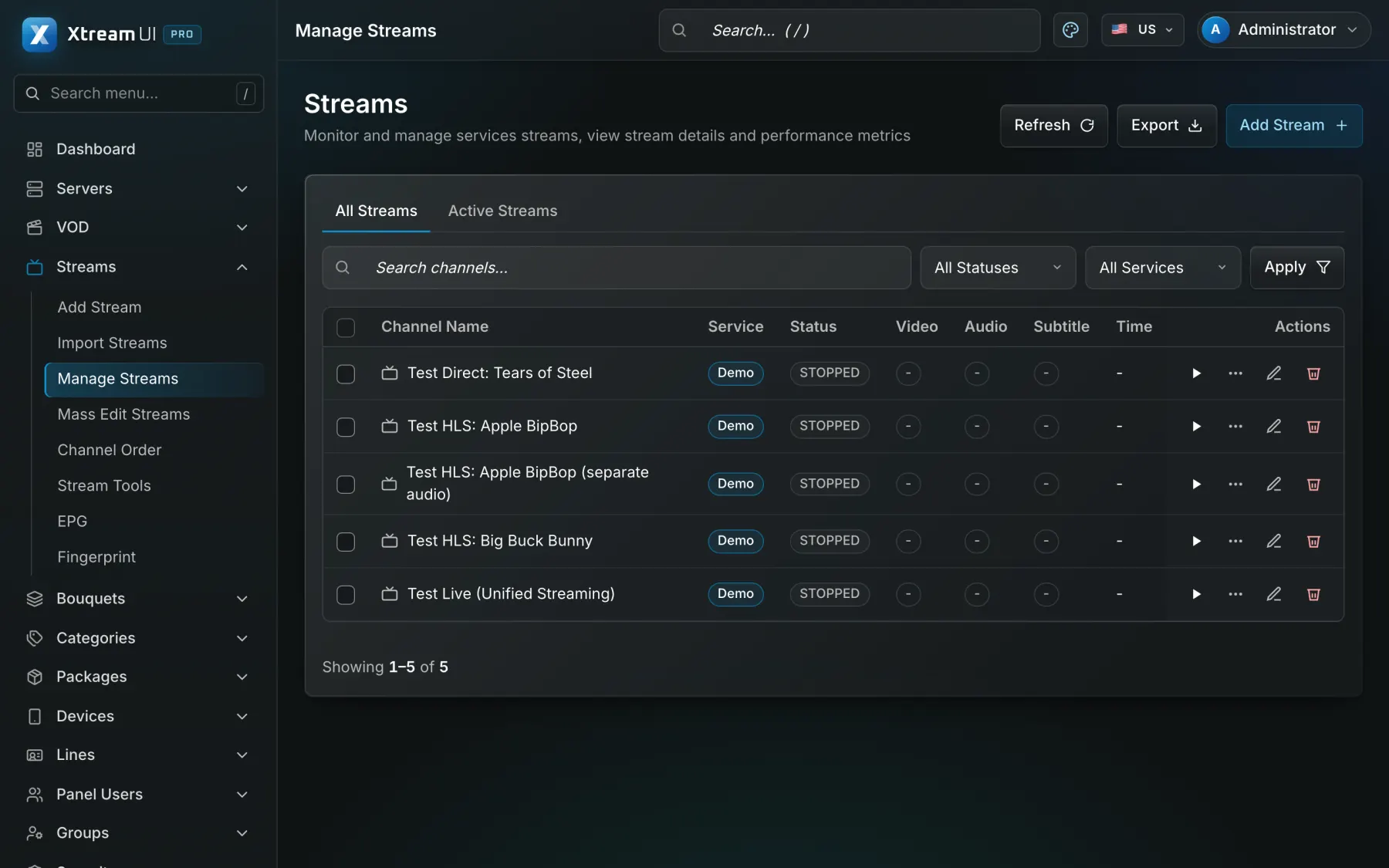
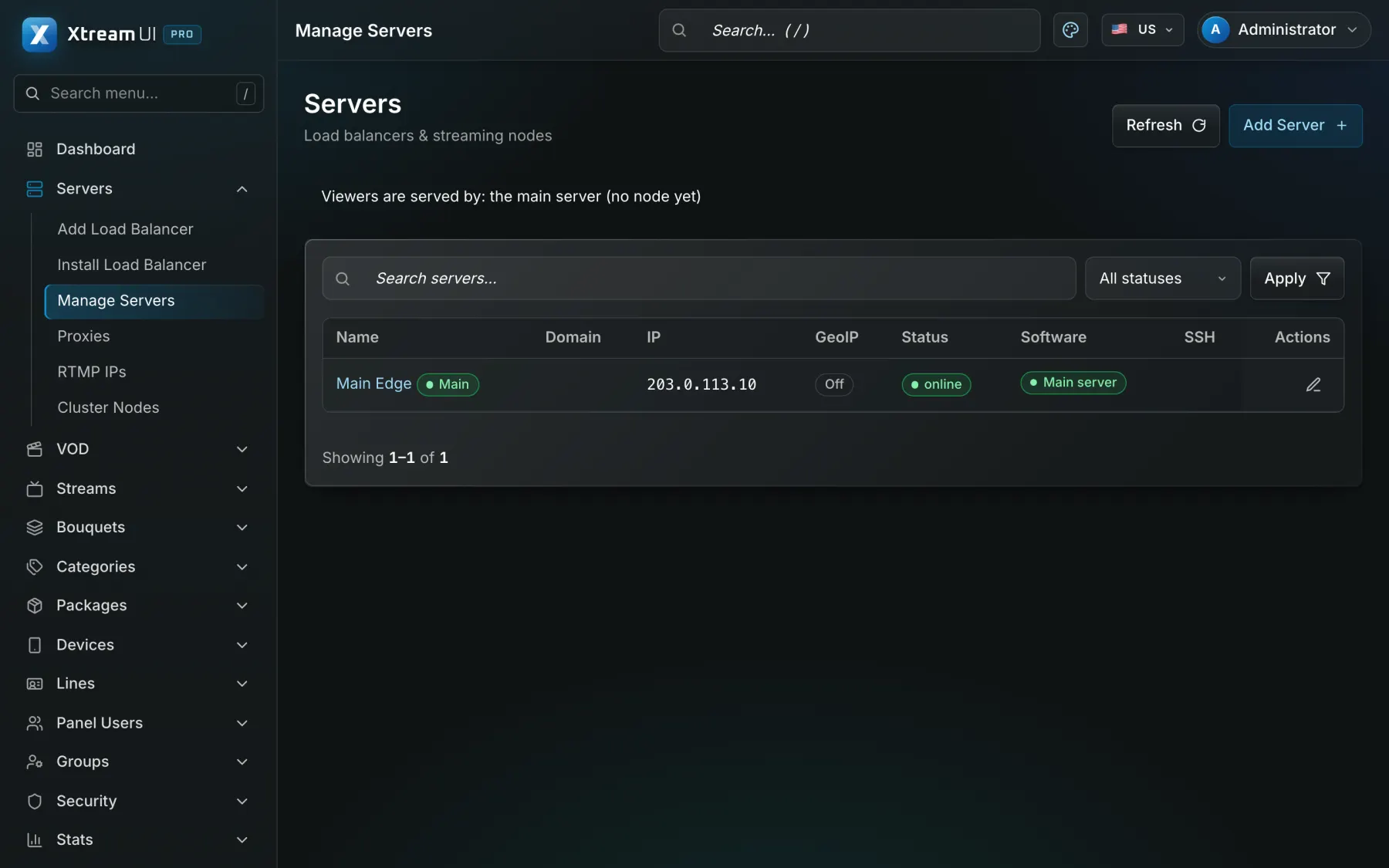
Screenshots of the dashboard of a fresh installation with the sample catalogue. Nothing is mocked up.

The Streams page of the dashboard: the live channels with their status, category, source and output formats.
Live streaming · Origin hub with one upstream per channel · RTMP in and out · ffmpeg transcoding
The Servers page of the dashboard: the main server and the nodes with their status and version.
Distributed streaming nodes · Installed over SSH from the panel · GeoIP routing · heartbeats and traffic stats

Infrastructure architecture

Example deployment: a regional broadcaster

The origin next to the playout, two nodes in the region's data centres, the archive ingested as VOD, and two distribution partners with their own accounts.

Pick a part of the diagram to see what it does.

In a broadcast deployment the sources are the playout feeds (RTMP or transport streams) and the archive; the panel holds the channels, the EPG, the catalogue and the partner accounts; nodes in each region serve the viewers; partners and their systems connect through the API.

  1. Bring the feeds in

    Each channel's playout feed is added as a source; EPG comes from your XMLTV; the archive is ingested and encoded as VOD.

  2. Place the nodes

    Enrol a node in each region; GeoIP routing sends viewers to the nearest one, and country rules keep territory-limited content where it belongs.

  3. Hand partners their accounts

    Each distribution partner is a partner account with the bouquets it may sell and a credit balance; it manages its viewers from its own dashboard or its system.

  4. Watch the operation

    Connection and traffic views, metrics and alerts show the audience per channel and per node; maintenance mode and backups cover the rest.

Configuration mapping

Your concepts, the platform's objects

The platform has no industry-specific objects: a bouquet, a line, a package or a partner account is used as the concept your industry needs. These are conceptual mappings, not native features of that industry.

In your industryOn the platform
Linear channelLive channel: a stream with its sources, EPG and output formats
Regional deliveryStreaming nodes: edge servers enrolled from the panel, one per site or building
Archive and catch-up libraryVOD catalogue: movies and series with seasons and episodes, categories and metadata
Distribution partnerPartner account (reseller): a delegated dashboard with credits, permissions and its own lines
Channel bundleBouquet: a named set of channels, films or series that a package grants
Partner and billing systemsReseller API and webhooks: the operations of the panel from your own system

Integration considerations

Playout systems feed the platform over RTMP or transport streams; EPG arrives as XMLTV; partners' systems use the Reseller API and webhooks; subscriber-facing apps use the Xtream Codes API, M3U and the portals. There is no native integration with a specific playout or ad-insertion product, and no DRM: delivery is protected by signed, viewer-bound links.

Security considerations

Signed and expiring playback links bound to the viewer's address, connection limits, GeoIP and ISP rules per line, and automatic blocking of brute-force attempts protect delivery; two-factor sign-in, permission groups and the audit log protect the panel. Territory restrictions are country rules on lines and packages, not content encryption.

Content rights and licensing

The broadcaster distributes only channels and programmes it holds the rights for, in the territories those rights cover; the platform supplies no content and no rights. The Enterprise plan adds integration work and an SLA for the operation.

Content Rights & Acceptable Use

Help centre

Questions from this industry

The questions operators ask before a deployment. The help centre has the general ones.

Help centre
Does the platform provide DRM?

No. Delivery is protected by signed, time-limited playback links bound to the viewer, connection limits and country rules. Content that requires DRM for its licence is not a fit today.

How does scaling for a big event work?

Enrol more nodes from the panel; each takes the channel once from the origin and serves its viewers. The control plane routes viewers by load and by country, and the origin serves everyone while no node is available.

Can viewers use the apps they already have?

Yes. The platform speaks the Xtream Codes API, M3U/XMLTV, the MAG portal and Enigma2, and ships a web player, so common player apps and boxes work without a custom app.